Most landlords get a pest and building inspection done before they buy. That’s the right call – nobody wants to discover termite damage or a cracked foundation after they’ve already settled.
But here’s what a lot of property owners don’t think about: the building didn’t stop moving the day you bought it.
Timber expands and contracts with every season. Moisture finds its way into places it shouldn’t. Termites don’t care that you had an inspection three years ago. And in the Newcastle and Hunter region, coastal salt air accelerates deterioration on roofing, gutters, and external timbers faster than most owners realise.
A pre-purchase inspection tells you the condition of a building at one point in time. Regular inspections tell you what’s changed – and catch problems before they become expensive.
What Changes After You Buy
A lot, actually.
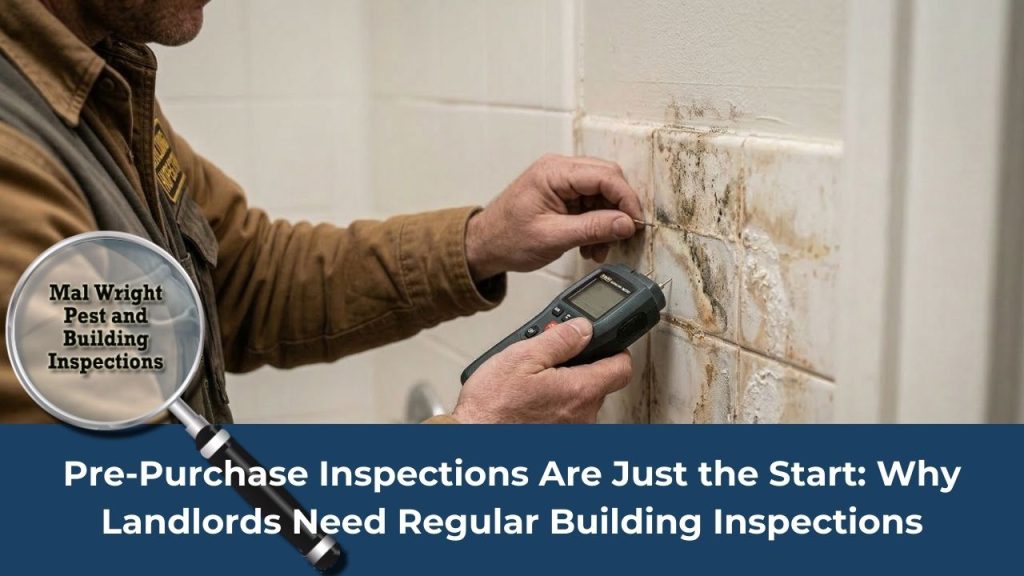
Buildings are affected by weather, use, age, and the behaviour of tenants. Water ingress is one of the most common issues we find in properties that haven’t been inspected since purchase. A small leak around a window frame or roof flashing that goes unnoticed for 12-18 months can cause significant timber decay and mould growth. What starts as a $400 repair quietly becomes a $6,000 problem.
Termites are the other major concern. The Hunter region has active termite pressure year-round. A timber pest inspection at purchase confirms there was no active infestation at that time – it doesn’t provide ongoing protection. AS 4349.3-2010 (the Australian Standard for timber pest inspections) recommends inspections every 12 months as part of an ongoing management program. In high-risk areas near bushland or moisture, more frequently.
The Duty of Care Reality
If you’re a landlord – residential or commercial – you have a legal obligation to maintain your property in a safe and habitable condition.
That’s not just about fixing things when tenants report them. It’s about proactively identifying risks before someone gets hurt or suffers loss. A documented inspection creates a clear record that you took reasonable steps to assess your property’s condition. If something goes wrong and there’s a dispute, that paper trail matters.
We’ve inspected properties for landlords where tenants had been living with concealed defects – subfloor moisture, roof leaks tracked only by ceiling staining, timber framing softened by years of undetected water damage. None of it was visible to the naked eye from a routine property manager walkthrough.
Thermal imaging found the water. The borer scope confirmed the extent of the damage without pulling walls apart.
What a Building Maintenance Inspection Actually Covers
A building maintenance inspection is different to a pre-purchase inspection. It’s specifically designed for owners who want a professional condition assessment of a property they already own.
The inspection covers structural elements, roofing, gutters and drainage, subfloor (if accessible), moisture and water ingress, pest activity, and any safety concerns. You get a written report – compliant with AS 4349.1-2007 – that clearly separates minor maintenance items from defects requiring prompt attention.
For landlords managing multiple properties, it gives you a prioritised maintenance schedule rather than a reactive list of repairs as things break.
How Often Should You Inspect?
For most residential rental properties, a professional building inspection every 2-3 years is a reasonable baseline. Timber pest inspections annually, given the termite pressure across Newcastle, the Hunter, and coastal areas.
Older properties – anything pre-1980s, particularly weatherboard construction in suburbs like Mayfield, Merewether, or Carrington – warrant more frequent attention. These buildings have age-related vulnerabilities and often have original plumbing and subfloor timbers that need monitoring.
Commercial properties with higher foot traffic, older construction, or tenants using the space in ways that put stress on the building should be on a similar schedule.
If you’ve recently had a difficult tenancy, a post-vacancy inspection before the next tenant moves in is worth doing. Meth testing alongside a building and pest check is something more property managers are including as standard – and for good reason.
The Cost of Not Knowing
The most expensive repairs we see aren’t caused by sudden failures. They’re caused by slow, undetected deterioration that had years to develop.
Termite damage that goes unnoticed doesn’t stop. It spreads. A termite inspection at purchase is not insurance against future infestation – it’s a snapshot. Ongoing inspections are the only way to catch activity early, when treatment is relatively straightforward and structural damage is still limited.
Water damage is the same. Buildings in our region deal with significant rainfall, humidity, and for coastal properties, salt-laden air that accelerates corrosion of metal fixings and deterioration of painted surfaces. Annual or biennial inspections catch these issues at the maintenance stage, not the remediation stage.
Getting Started
If you own rental or commercial property in the Newcastle, Hunter, Lake Macquarie, Port Stephens, or Central Coast areas and you haven’t had a professional inspection since purchase, it’s worth booking one.
We carry out building maintenance inspections for landlords and property owners across the region. Reports are written in plain English with photos, clearly divided between minor maintenance items and items needing prompt attention.
Call us on 0488 885 203 or Order an Inspection online today.